Read Transcript
Child: Welcome to my mommy’s podcast!
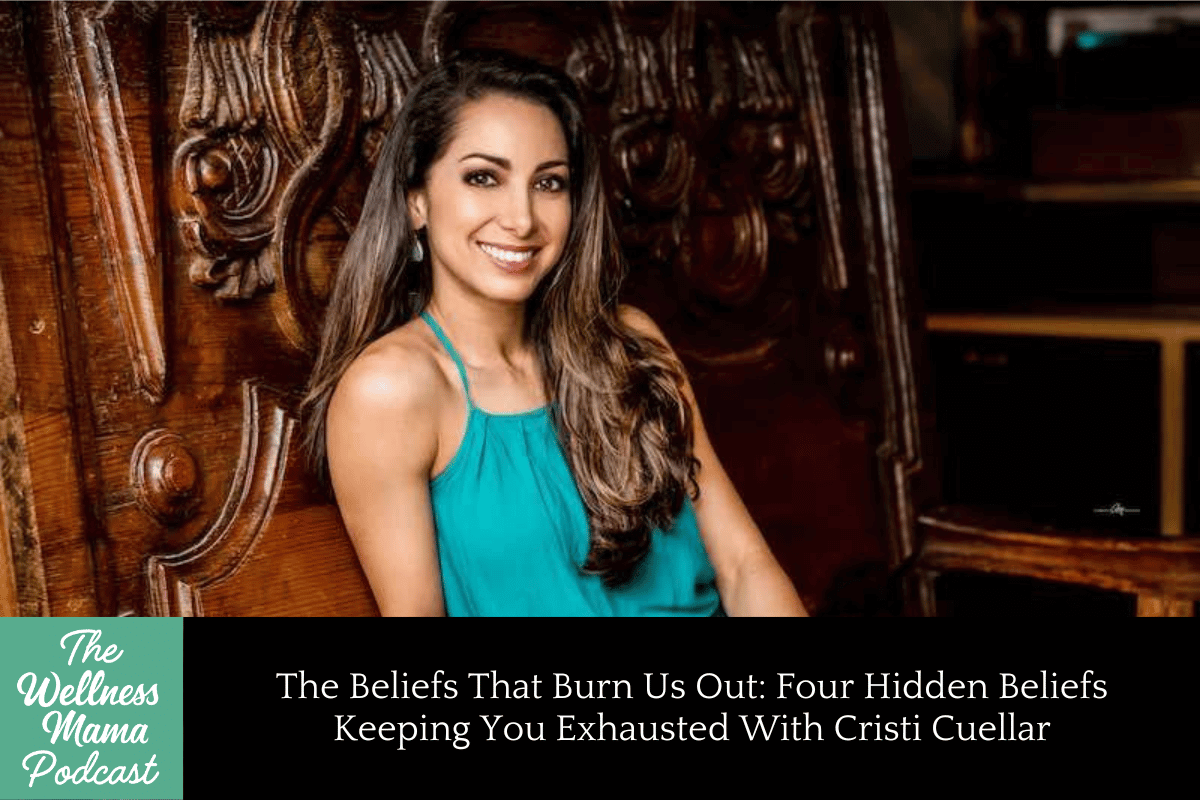
Katie: Hello and welcome to the Fit Bottomed Zone Podcast. I’m Katie from fitbottomedzone.com. And I am back today with my real life friend Christie, who if you missed our first episode, I’ll link to it in the show notes. I learned a lot about dry needling, which I’ve also gotten to experience with her. And in this episode we go deep on the beliefs that burn us out and her four hidden beliefs that keep us exhausted.
And I love this. Some of this really, really resonated for me. She and I share a journey through Hashimoto’s as well as she had some other autoimmune things that she learned as well, and all of the, like the layers of healing that go into this physical, mental, emotional, and even spiritual. And we get to go pretty deep in this one.
I enjoyed this episode and I know you will as well. So let’s join Cristi. Cristi, welcome back. Thank you for being here again.
Cristi: Oh, I’m so happy to be here. This is so great, Katie. Thanks for, thanks for inviting me.
Katie: If you guys missed it I will link to our first episode, which is how I first connected with Christie, learning all about dry needling and getting to experience it. That will be in the show notes. In this one, I’m excited to go a little bit deeper and even more vulnerable. Because I have a feeling we have at least some like kind of high level philosophical overlap in our journeys. And specifically I wanna talk to you about the beliefs that burn us out and the kind of hidden things keeping us exhausted, especially as women. And it sounds like you and I have been on somewhat similar journeys in as far as physical health challenges that led to like kind of deeper levels of healing and all that came with that.
So if you’re willing, I know it’s a little bit vulnerable of a story, but you have such a powerful healing journey. If you don’t mind, can you share kind of your journey through breast implant illness and fibroids and autoimmune issues and how this seemingly was a catalyst for incredible work that you now do?
Cristi: Yeah, thanks. Gosh, where do I start? Well, I wanna start by saying that the last time I saw you was at the Biohacking conference here in Austin Texas. And before that we would, I think I remember you from the Paleo Effects conference and I was trying to remember like I was so interested to go to those conferences. And sometimes I’m like, not gonna look to at the screen because I’m really trying to remember my story. Let’s see. So the main reason I remember that I was into the Paleo effects movement is, before that. Let’s see. I have just been in this like journey of feeling free within myself and like. Just really getting into health and wellness and then, and then, you know, healing myself in natural ways.
I was, I grew up an athlete. I was in track and field, gymnastics. I was just cheerleader. I just loved performing. Track and field was my favorite thing. I tore my ACL that led me to become a physical therapist. I also had like crazy amount of atrophy. So I like always wondered like, why did I have the most atrophy from like my other, because I had other friends that had ACL injuries, and I don’t understand why I healed the slowest out of my friends. And so later it seems that I had these autoimmune challenges and that’s why I was in a constant state of inflammation. So that’s one thing I discovered when…
I’ll tell you more about this story later, but I was working as a physical therapist in Las Vegas and I decided to do a bodybuilding competition and get into bodybuilding because I was just not feeling well and I just really wanted to like I don’t know, take my athleticism to the next level. So I trained for a bodybuilding competition in 2000… 8? 2007? 2007? Yeah. Or 2008, I’m not sure. There was a bodybuilder trainer that worked at a physical therapy clinic I worked at. I asked her if she could train me for three months, train me for three months. She trained me. This was the first time I ever did a diet. I had like never done a diet. I’m from South Texas. I grew up on tacos, enchiladas. And pizza. because you know, my parents didn’t have time to cook sometimes.
And fast food. And I just thought that like having a subway sandwich was like healthier than what I was eating. And oh my gosh. Like when I became a bodybuilder, I was like, oh my gosh, I have to like cook my own fish and make pancakes out of oatmeal and only eat eggs. And like, but I had such a… Doing that, like, clear diet actually made me feel better. And I got super shredded and I won my first competition, just training, doing that training schedule for three months, which is amazing. And then of course, after you finish a competition, you’re just like, all right, time to eat all the pizza, beer and cookies and all that stuff. And then I’d get sick again, so then I’d train for another competition. And then I’d win, lose, whatever, whatever.
And then I’d get sick again. And so I was in this vicious cycle of like training really hard and also like maintaining my physical therapy job. And I was in a relationship and like then I had a pet and then, you know, I’m like doing family duties and I would just, I just burnt out. But I also discovered that I had leaky gut and my adrenals were just out. And at that time I also was diagnosed with Hashimoto’s. And yeah, we said the leaky gut and what else? I found out I had celiac. So, I had all these inflammatory things. I also did, like, I did a, I got an allergy test and I was allergic to 80 of the hundred of the 100 foods on that panel. So I was just like, what the heck am I going to eat?
So basically I don’t know, it seemed like it was more like a candida diet because it was just like taking out all carbs, all gluten, cheese, blah, blah, blah. And I got, I did really well. Obviously I did, I was still doing a little bit of fitness modeling gigs, but just training for, did not, I stopped training for bodybuilding things around 2012. And yeah, I also got breast implants around 2009, but I didn’t put two and two together. I was just like, oh, it’s my gut. It’s my, you know, I’m tired, this and that, which is true. I really had to like rewire my nervous system. I had to, you know, rest. I didn’t know how to rest. I was in this like performative lifestyle, which I thought winning bodybuilding contests and being pretty and shredded would like make me a better person.
Not that I really thought that, but you know, and that in my twenties and thirties, that’s what we kind of saw as success. But I actually was like so tired that I couldn’t go to the gym. I could maybe go to a Pilates class. I did enjoy yoga and I got into Qigong. And Qigong was one of the most restorative things for me. I also got into breath work. There’s a Qigong breath work technique that we did, and it was transformative. I could talk more about spirituality because I feel like that was what really opened up my spirituality. My connection with God. It was just like, instead of like praying at church, I could like feel God within me. And that’s something else I’ll talk about. But, what was I gonna say? Oh, yes.
I was also, I learned, I worked with a nutritionist that was certified by Paul Check and she was a holistic lifestyle coach. And that got me thinking like, okay, I really wanna learn about holistic lifestyle coaching. And studied under Paul Tech. I got certified as a holistic lifestyle coach. Level one, level two. Met those type of friends. And then just been doing deep work. Like the physical, the hormonal, the nutritional, and even the spiritual work since. And it’s like helped me grow. And I’ve done so much growth, so much work. It’s all about the nervous system and the gut and sleep, but even then, I was just still dealing with health issues like two years ago.
And I had a practitioner do some kinesiology muscle tests where she kind of like muscle tests various points in my body and she was like. Yeah, I think your breast implants are really like not allowing you to heal. And so I decided to take out my implants. And feel like I’ve been talking a lot.
Katie: That is more of your story than I had heard before and quite the incredible journey. I didn’t, we did have some like definite overlap because I also used to have Hashimoto’s and that was a big catalyst for me learning about so many things health and wellness, or even learning that to eventually finally figure out what was going on. Then I eventually to finally heal as well. And also the track and field connection. My kids do track and field and I’ve gotten into it. In the, now it’s crazy to say out loud, Master’s division as an adult. But I didn’t realize you had done track and field when you were younger as well. Angie brought in the breast implant illness… Oh, go ahead.
Cristi: I was gonna say, your friends that stayed at, the way that we met, how your friend, we got your friends to come stay at my place. Didn’t they do pole vault?
Katie: Mm-hmm.
Cristi: Yeah, I did pole vault as, when I tore my ACL, I wasn’t like sprinting full out yet, so I decided to enter women’s, or start the women’s pole vault in South Texas. And it was a, it was a display event, so I was like one of the first pole vaulters in south Texas. It was interesting.
Katie: That’s cool. I did not know that. So yeah, another connection. All my kids have pole vaulted and a lot of them still do. But I love that you kind of walked us through the layers of this because I feel like this is a very common thing of like we at first think it’s a physical thing and so we do all the physical things to address it. And then as some, we get a little bit more bandwidth from just supporting our body a little bit more. Then we get to like these deeper layers and truly we’re all on a journey that is lifelong or perhaps longer than that. But I love that you kind of touched on all those different points. And you’ve talked about how like burnout isn’t necessarily about doing too much, but it’s also about our belief system and what we like, our mindset, our belief around that.
Can you walk us through a little bit more of kind of what’s going on with burnout in women specifically? Because I hear this so much and like women especially who are burned out, overwhelmed, exhausted all the time.
Cristi: Yeah, well there are like, I would say that there’s like four beliefs that actually can cause burnout. And this whole like no pain, no gain just really annoys me. Like I don’t know. I feel like success is like measured by how far you’re going, you sleep when you’re dead and like all that kind of like mentality. And we think that, you know, I don’t know, like going to the gym and like lifting heavy is gonna, is going to help us develop like leaner physiques and stuff. But if our nervous system is in overwhelm and we’re just so sympathetic, we’re actually breaking down tissue instead of building tissue. And so one thing that I believe is that we could do energy building exercises that can just improve the blood flow to certain areas of the body, like, you know, the lower body and the pelvis or the mid body, the shoulders.
And then, you know our upper body and what was I gonna say? Yeah. So there’s ways to like bring blood flow to the muscles instead of just like build bigger muscles. And we all think like, oh, just exercising our abs and the front side of these physique looking nice muscles is like good for us, but we actually to be training like the postural muscles as well. But, yeah, so the no pain, no gain being in anabolic versus catabolic is a thing. And then there’s this whole like, be a good girl and like just do what you’re, just do what you’re told. You’re a female, like you can’t get mad and you can’t really express yourself. And yeah, like girls have to have a certain reputation. I mean, there’s, you know, there’s, not everyone is like this, but I grew up in a, I grew up Catholic.
I grew up in a very cultural, like deep culture area or part of Texas where, you know, just like, who are your parents? Oh, you’re doing this, you’re doing that wrong. And like I feel like there’s a lot of pressure for us to like be good girls and not have boundaries. And being this like people pleasing and I don’t know. I feel like sometimes we’re not told to speak up or like honor ourselves just because we’re trying to follow the culture and like follow what’s the, doing the right things and have to stay quiet and submissive. But I just really have been working out, working on honoring myself, honoring my voice, speaking the truth, and just like staying along, aligned with my power.
And then I would say number three is like, women think that eating low calorie diet and like just eating for a sexy body is like better than eating nutritious food that stabilizes our blood sugar. A lot of us are in burnout because our blood sugar is di dysregulated, we’re just like you know, eating pretzels because yeah, like it’s low calorie, but if you like eat pretzels by themselves, your blood sugar is just going to spike and then drop and yeah, we just like not really eating to keep our blood sugar regulated. And then, I mean, a big thing, the main thing that is, has held me back is just like this happiness comes from success kind of mantra thing. And for me it’s been like this, having this like inner freedom and feeling like I’m stuck in my, I don’t know, if I’m feeling stuck and like in a cage all the time because I’m like working for someone else and like being, like trying to follow rules all the time.
That to me is like burnout or has led to burnout because I’m just always trying to like fit in a mold that I don’t really fit in. Does that make sense?
Katie: That does make sense and it feels very resonant for me, and I would guess to a lot of women, especially who are listening. And especially as you talked about, I’ve been through some similar things with that kind of good girl conditioning and all of the shoulds that get put on us from such a young age. And I’ll eventually share more about the personal details of this, but the last three months have been by far the hardest of my life. And I feel like some of that has been going into those stories and into that work and into kind of like the darkness and unraveling and fully dissolving. And sometimes that work is excruciating. I also really resonated with what you said about that, the kind of, I feel like these false stories we all have about that I’ll be happy when stories.
Like, and it’s always tied to say, I’ll be happy when I’m thin. I’ll be happy when success. I’ll be happy with this amount of money or whatever it is. And that was something I realized in my healing journey as well, was that ironically I learned to choose to be happy. With wherever my body was, even if I wasn’t healed or a size two or any of these things. And then ironically, those things started shifting without the same like effort and stress as it was when that was what I was focused on. And so I love that you tied kind of all of that. And I’m curious, are there any beliefs that you’ve like totally let go of or new beliefs that you live by now that have come from that journey?
Cristi: Yeah. Well, something else that I was gonna tell you is well, you had asked me before, like what was a book that I really liked and I talk about the Four Agreements by Don Miguel Ruiz. Because it was all about, you know, I, it was like a personal development type book that we’ll, we can talk about later, but another book, well, he has several books or another wellness leader that I really love and follow is Joe Dispenza. And when I learned about frequen-, like how we can make our own frequencies, I was just like blown away and that really like brought me to, gave me hope. Because we can totally create our own little pharmacy of chemicals by using our mind. And again, and so you were saying like, yeah, what are the limiting beliefs?
And it was a lot of like, am I too much or am I not enough? And it was too much, not enough, too much. And so again, it’s like that’s where the people pleasing thing came up. So, and then there was another thing that I would also, I got into was the perfectionism. And so I don’t really think of, oh, this is so perfect. I just think about, hey, I’m gonna show up in my excellence. How can I show up in my excellence? And another thing that I kind of broke through was, you know, it’s not what I do, it’s how I be, which is so important. And sometimes I go through this compete and compare with other women in my industry or other wellness entrepreneurs that are like, you know, this much more successful.
And I turn it around with like, there’s like so many steps that you could take to like, become more successful, but still like the, your ways of being are also gonna, possibly, are probably gonna get you to the success that you wanna be at because this like compete and compare doesn’t get us anywhere. It’s actually the gratitude and the frequency and the chemistry that, that gratitude frequency does for us is to me the most, I could call it successful. I could call it just like a goal to be. Because like, how far do you have to go to finally feel gratitude? You could just be grateful for little things like having a roof over your head and you know, just like your health right now. So yeah, I would say gratitude is like one of the mo… One of the things that I strive for and the things that I’ve let go are comparing and the judgment.
Katie: I love that. I think that’s such a powerful reframe and like letting go of kind of those stories and redefining success as more of like joy. And my friend even reminded me yesterday of like that concept of like, what do I want to feel? Like what do I, like, how do I move toward that? And realizing it’s like it might be something like ease. Or I think gratitude’s a phenomenal one because that’s something we can choose and work on in like little moments and even the. Like neurobiology of that is so fascinating. They’ve done studies, it’s funny that we needed studies for this, but how even finding little moments of gratitude literally changed our brain. And I know Joe Dispenza talks about that as well, and I’ll link to some of his books in the show notes.
But I feel like that is such a powerful reframe and one that requires a little bit of practice. Like it didn’t, for me, it still, in a journey. It did not happen overnight, but it’s been very powerful. As you go, and I know we’re running out of time and that you have a patient, so I wanna respect that. But lastly, before we wrap up briefly, what role, if any, do you feel like things like somatic healing and inner child work play in the kind of the deeper levels of this healing once we’ve addressed kind of the basic physiologic needs?
Cristi: Yeah, I feel like that is so important. I was a Paul Check practitioner, who believed in the four doctors, which was Dr. Diet, Dr. Movement, Dr. Quiet, and Dr. Happy. And you know, there’s so many things that we could do to get those parts of our wellness and alignment. But the happiness is the one that we’re gonna work on for a long, long time. And there is a lot of somatic practices. I think breath work is amazing. But I actually did some workshops called journeys of Wisdom by John McMullin. And what he did, or what we did is we revisited, you know, childhood instances or events where we felt abandoned by a parent or sad about this or you know, they call it trauma and I wouldn’t like call it trauma, but an event where, you know, it really like shaped your beliefs in the future.
And there are so many practitioners around the world where you can go revisit these events and go back to it with understanding, compassion. And yeah, and like reframe the event and like let it go and heal it. There’s ways to cut cords. There’s so many ways to do it. I did do some plant medicine. I don’t recommend doing many of these ceremonies. But it was very impactful for me. It’s impactful when you do it in an intentional way with a very like, professional practitioner. But those things really helped. And I continue to surround myself with other people that are doing the same work that, so that we could just be constant mirrors for each other and show up with vulnerability and open perspective and invitations to just like revisit, you know, these like limiting beliefs.
So most of my friends, you know, just have done this work as well and we can just look at each other with neutrality and curiosity in seeing what the deeper, what deeper reasoning we have for how we’re feeling at the moment.
Katie: I love that. Well, I’ll put some links for people who want to kind of go down those rabbit holes of learning about somatic work or inner child work. I’ve also gotten to experience those and found them really profoundly helpful as well. And I hope we get to have more conversations in the future. And I know that you have such a passion for helping people and that you have a patient. So I don’t wanna take any more of your time for this episode. But Cristi, it is an absolute joy to talk to you. Thank you so much for being here, for sharing so vulnerably and for everything today.
Cristi: Thank you so much, Katie. This was so fun. And I, yes, I, if anybody wants to reach out, I just like love having these conversations. Health and wellness is a multifactorial wheel. And yeah. If we don’t take care of all the parts of our wellness, we are gonna pay for it later. Yeah, so anyway, good to see you and I hope we have another conversation soon.
Katie: Amazing. Well, I will put your links as well. If anybody in the area, highly recommend, go see Cristi, try dry needling. It was amazing. More conversations to come. But for today, thank you Cristi, and thanks to all of you for listening, and I hope you will join me again on the next episode of The Fit Bottomed Zone Podcast.





Leave a Reply